
Reviewing is optional; you can read proposals and decide by yourself. With a committee, each reviewer scores their assigned proposals in the portal, and the Proposals page shows how many reviews are in, the average score and what the committee recommends. Scores inform your decision; they never make it.
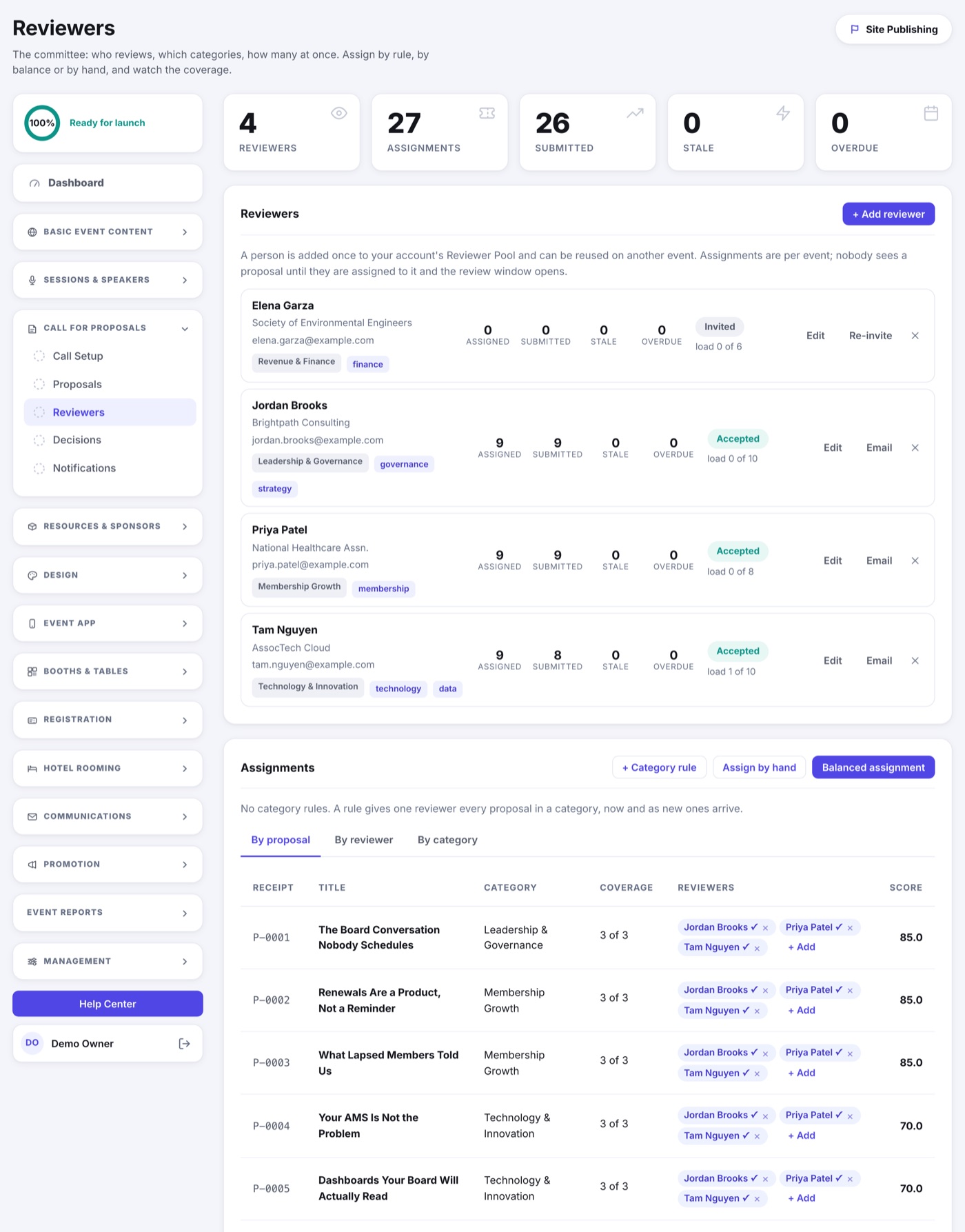
Build the committee
- Open Call for Proposals › Reviewers and click Add Reviewer. Reviewers live in your account's pool, so the same people can serve on several events.
- Give each one a maximum load if you want the balancer to respect it, and choose whether they hear about assignments by email.
- Send the invitation. A reviewer signs in to the portal with their email address, picks Reviewer sign-in, and accepts. A free trial can invite three reviewers.
Assign proposals
- Rules assign automatically: every proposal in a category to a reviewer, for example. A rule keeps working for proposals that arrive later.
- Balance spreads the unassigned proposals across the committee to reach your review target (three by default), honoring loads and declared conflicts. You see the preview before it commits.
- Direct assignment adds one reviewer to one proposal, with a due date if it differs from the call's.
- The coverage table shows each proposal's reviews in, stale and overdue, by proposal, by reviewer or by category. Empty spots are named so you can fill them.
The rubric
Call Setup carries the rubric: the criteria, their weights and a line of guidance for each. Six sensible criteria are there by default. Edit freely until the first review is started; from then on the rubric is locked so every score means the same thing. Turn on blind review to hide speaker names, companies and photos from reviewers; turn on speaker feedback if you want reviewers to write a note the speaker may eventually see.
What a reviewer sees
- Their assignments, each with a due date and a state: to review, in progress, submitted, or a revision to look at again.
- Before reading, a conflict check: none, possible, or a conflict. A declared conflict recuses them; a possible one waits for you to clear or recuse it from the Reviewers page.
- The proposal exactly as submitted (without the speaker's identity when the call is blind), a score from 1 to 5 on each criterion or not enough information, a recommendation, their confidence, a comment to the committee and, if enabled, feedback for the speaker.
- If the speaker revises after a review, the review is marked stale and stops counting toward coverage until the reviewer confirms or updates it.